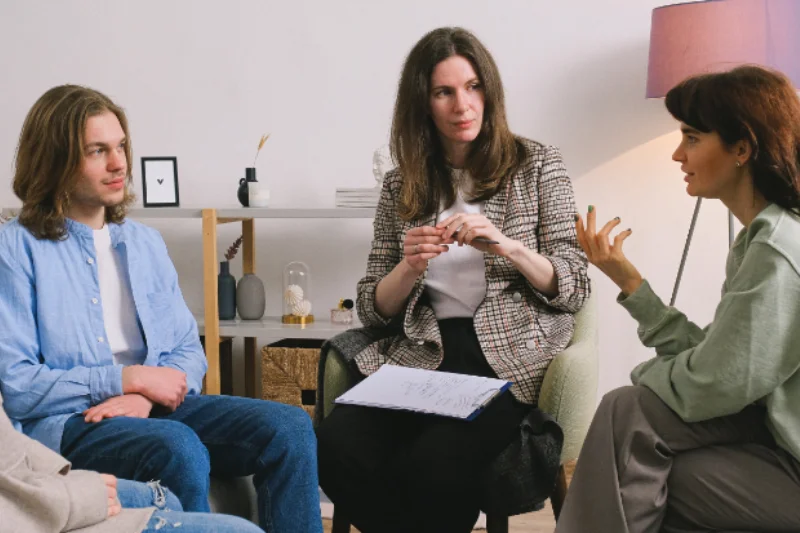
Low self-worth in women often hides behind a life that looks fine on the outside. You may be capable, kind, and admired, yet inside there is a quiet voice insisting you are not enough. You apologize for taking up space, downplay your achievements, and feel like an impostor even when you have earned your place. The gap between how others see you and how you see yourself can feel exhausting to carry.
If this sounds familiar, you are not simply insecure by nature. For many women, low self-worth is something learned, not something true. Understanding where it comes from is the first gentle step toward believing you are enough.
Table of Contents
What Low Self-Worth in Women Actually Looks Like
Low self-worth rarely looks like obvious insecurity. More often it shows up in quiet ways. There are a few common signs worth recognizing: struggling to accept compliments; putting everyone else’s needs first; harsh self-criticism; difficulty setting boundaries; and a persistent sense of not deserving good things, even when they arrive.
Because you keep functioning and often achieving, low self-worth in women can go unnoticed by others. Many women only recognize it when they notice how differently they treat themselves compared to how they treat the people they love.
A Trauma-Informed Way of Understanding It
Looking at this through the lens of trauma-informed care shifts the question from “What is wrong with me?” to “What happened to me, and how did I learn to cope?” Trauma-informed care is an approach used across mental health support settings that recognizes how common difficult early experiences are and how deeply they shape the way we see ourselves.
Seen this way, low self-worth in women is not the truth about who you are. It is often a belief absorbed early, when love felt conditional or criticism was constant. The American Psychological Association notes that early adversity can shape self-esteem and self-perception for years — the mind internalizing old messages long after they stopped being true.
Where It Comes From: Family, Culture, and Expectation
These patterns rarely appear out of nowhere. Low self-worth in women often takes root in early environments where approval had to be earned. The Centers for Disease Control and Prevention notes that adverse childhood experiences — such as growing up around criticism, neglect, or emotional unpredictability — are common and can shape health and behavior well into adulthood, with women among the groups most affected.
Culture adds another layer. Many women are raised to be modest, accommodating, and self-effacing, and are quietly taught that confidence is arrogance and needs are selfish. When you absorb the message that your value depends on pleasing others, believing in your own worth can feel almost forbidden. Over time, self-doubt can start to feel like humility.
The Emotional and Psychological Impact
The impact of low self-worth in women builds slowly, which is part of why it goes unaddressed for so long. When you do not feel worthy, you may settle for less than you deserve in relationships and work, and struggle to advocate for yourself. It can fuel anxiety, people-pleasing, and a fear of being truly seen.
There is a relational cost too. It is hard to feel close to others when part of you believes you are not enough, and hard to receive love when you doubt you deserve it. Many women describe feeling like they are performing worthiness rather than resting in it.
Why It Feels So Hard to Change
If you have ever been told your worth and still not believed it, you have met the reason change is difficult. Low self-worth in women is not weak willpower — it is a deeply grooved belief the nervous system formed to make sense of early experiences. At some point, believing you had to earn love felt safer than expecting it freely.
So when someone praises you or you try to value yourself, your mind can quietly reject it, because the old belief feels more familiar than true. This is why positive thinking alone rarely works. Real change happens gradually, as you gather evidence that you are worthy simply as you are. Rebuilding self-worth is slow, tender work, and it is meant to be.
Recovery and Healing Are Possible
Healing from low self-worth in women does not mean becoming arrogant or self-absorbed. It means slowly replacing an old, borrowed belief with a truer one. Recovery wellness in this context looks like noticing the inner critic, treating yourself with the kindness you offer others, and letting small moments of self-respect accumulate over time.
Much of this work is easier with support. Trauma-informed therapy can help you trace where these beliefs began and build a kinder relationship with yourself in a safe, steady space. Compassionate mental health support gives you a place to be seen and valued while you learn to value yourself. Alongside professional care, small practices help: accepting a compliment without deflecting, naming one thing you did well, and speaking to yourself as you would a friend.
Progress is not a straight line. There will be days the old voice returns, and that is part of the process, not a failure of it. What matters is the growing awareness — the moment you catch the harsh voice and choose, even in a small way, to believe you are enough.
Work with GMA Interventions
At GMA Interventions, we understand that low self-worth in women is rarely the truth about who you are — it is usually a belief formed long ago that no longer serves you. Through trauma-informed care and compassionate mental health support, we help women rebuild a steadier sense of worth and heal at a pace that feels manageable. Contact us to see how we can support you or a loved one on the path toward confidence, recovery, and feeling enough exactly as you are.
Emotional burnout in women often builds so gradually that you do not notice until you are running on empty. You keep showing up — for work, for family, for everyone who needs you — but the warmth has drained out of it. Small tasks feel enormous. Rest does not seem to restore you. You are not lazy and you are not ungrateful; you are depleted in a way that sleep alone does not fix.
If this sounds familiar, you are not failing at life. Emotional burnout in women is what happens when you give and give without enough coming back. Understanding why it happens is the first gentle step toward filling your own cup again.
What Emotional Burnout in Women Actually Looks Like
Burnout rarely looks dramatic. More often it shows up as a slow fading. There are a few common signs worth recognizing: exhaustion that rest does not cure; growing detachment or numbness; irritability over small things; a sense of dread about ordinary tasks; and a quiet feeling that you have lost yourself somewhere along the way.
Because you keep functioning, emotional burnout in women often goes unnoticed by others. Many women only realize how depleted they are when they can no longer summon the energy they always relied on, and wonder where their old self went.
A Trauma-Informed Way of Understanding It
Looking at this through the lens of trauma-informed care shifts the question from “What is wrong with me?” to “What happened to me, and how did I learn to cope?” Trauma-informed care is an approach used across mental health support settings that recognizes how common overwhelming experiences are and how deeply they shape the way we carry stress.
Seen this way, emotional burnout in women is not weakness. It is often a nervous system that has been running in survival mode for far too long. The American Psychological Association notes that chronic, unrelenting stress can wear down both body and mind — leaving you exhausted, detached, and unable to recover the way you once did.
Where It Comes From: Family, Culture, and Expectation
These patterns rarely appear out of nowhere. Emotional burnout in women often takes root in a lifetime of putting others first. The Centers for Disease Control and Prevention notes that adverse childhood experiences — such as growing up around instability, caregiving too young, or emotional unpredictability — are common and can shape health and behavior well into adulthood, with women among the groups most affected.
Culture adds another layer. Many women are raised to be endlessly giving, to measure their worth by how much they do for others, and to treat their own needs as optional. When rest is treated as laziness and self-sacrifice is praised, burnout becomes almost inevitable. Over time, running on empty can start to feel normal.
The Emotional and Psychological Impact
The impact of emotional burnout in women builds slowly, which is part of why it goes unaddressed for so long. Depletion touches everything. It shows up as fatigue, low mood, trouble concentrating, disrupted sleep, and a shrinking sense of joy in things that once mattered.
There is a relational cost too. When you have nothing left, it is hard to be present with the people you love, which can bring guilt on top of the exhaustion. Many women describe feeling like they are simply going through the motions, present in body but far away inside.
Why It Feels So Hard to Slow Down
If you have ever tried to rest and felt guilty instead of relieved, you have met the reason change is difficult. Burnout is not weak willpower — it is the result of a nervous system that never learned it was safe to stop. At some point, constant giving felt like the only acceptable way to be.
So when you try to slow down or ask for help, your body can flood you with guilt, as though rest must be earned. This is why pushing harder only deepens the exhaustion. Real change happens gradually, as you gather evidence that you are allowed to receive care, not only give it. Recovering from burnout is slow, gentle work, and it is meant to be.
Recovery and Healing Are Possible
Healing from emotional burnout in women does not mean abandoning the people you love. It means including yourself among those worthy of care. Recovery wellness in this context looks like slowly restoring what has been depleted — real rest, honest limits, and permission to receive support rather than carry everything alone.
Much of this work is easier with support. Trauma-informed therapy can help you understand your depletion without shame and rebuild healthier patterns in a safe, steady relationship. Compassionate mental health support gives you a place to set down some of the weight you have been carrying. Alongside professional care, small practices help: protecting small pockets of rest, saying no without over-explaining, and letting others help without guilt.
Progress is not a straight line. There will be days the depletion returns, and that is part of the process, not a failure of it. What matters is the growing awareness — the moment you notice yourself running past empty and choose, even in a small way, to pause and refill.
Work with GMA Interventions
At GMA Interventions, we understand that emotional burnout in women is rarely about doing too little — it is usually a sign of how much you have carried for how long. Through trauma-informed care and compassionate mental health support, we help women restore what has been depleted and heal at a pace that feels manageable. Contact us to see how we can support you or a loved one on the path toward rest, recovery, and feeling like yourself again.
Perfectionism in women often looks like success from the outside. You are the one who double-checks everything, who cannot send the email until it is flawless, who feels a quiet dread that if you slip up, everything will fall apart. To others you seem driven and dependable. Inside, there is a harsh inner voice that is never quite satisfied, no matter how much you achieve.
If this sounds familiar, you are not simply “too hard on yourself” by nature. For many women, perfectionism is not really about high standards. It is about safety. Understanding where it comes from is the first gentle step toward loosening its grip.
What Perfectionism in Women Actually Looks Like
Perfectionism rarely announces itself as a problem, because it is so often praised. More often it shows up as a quiet, relentless pressure. There are a few common signs worth recognizing: fear of making mistakes, even small ones; difficulty finishing things because they are never good enough; harsh self-criticism that would horrify you if aimed at a friend; procrastination born of the fear of failing; and tying your worth almost entirely to what you produce.
Because achievement is rewarded, perfectionism in women often goes unquestioned. Many women only notice the cost when they realize how anxious, tired, and never-enough they feel, no matter how much they accomplish.
A Trauma-Informed Way of Understanding It
Looking at this through the lens of trauma-informed care shifts the question from “What is wrong with me?” to “What happened to me, and how did I learn to cope?” Trauma-informed care is an approach used across mental health support settings that recognizes how common difficult early experiences are and how deeply they shape the way we function as adults.
Seen this way, perfectionism in women is not a character flaw. It is often a nervous system that learned, early on, that being good enough, careful enough, or impressive enough was the way to earn love and avoid criticism. The American Psychological Association notes that people who experience early adversity often develop intense self-criticism and a strong need for control — ways the mind tries to feel safe in an unpredictable world.
Where It Comes From: Family, Culture, and Expectation
These patterns rarely appear out of nowhere. Perfectionism in women often takes root in early environments where love or approval felt conditional. The Centers for Disease Control and Prevention notes that adverse childhood experiences — such as growing up around criticism, high pressure, or emotional unpredictability — are common and can shape health and behavior well into adulthood, with women among the groups most affected.
Culture adds another layer. Many women are raised to be pleasant, capable, and impressive all at once, and are quietly measured by how much they do for others. When mistakes were met with disappointment or shame, striving for flawlessness can become a way to stay safe. Over time, perfectionism can stop feeling like a choice and start feeling like the price of being accepted.
The Emotional and Psychological Impact
The impact of perfectionism in women builds slowly, which is part of why it goes unaddressed for so long. Living under constant pressure to perform is exhausting. It shows up as anxiety, burnout, trouble sleeping, and a persistent feeling of never doing enough, no matter the evidence to the contrary.
There is an emotional cost too. When your worth depends on getting everything right, rest feels unsafe and mistakes feel catastrophic. Relationships can suffer, because it is hard to be truly close to others when you are afraid to be seen as flawed. Many women describe feeling like they are only as good as their last achievement.
Why It Feels So Hard to Ease Up
If you have ever tried to lower the bar and felt a rush of guilt or anxiety instead of relief, you have met the reason change is difficult. Perfectionism in women is not weak willpower — it is a protective response the nervous system installed for a reason. At some point, being flawless genuinely felt like the only way to stay safe or loved.
So when you try to let something be “good enough,” your body can register it as a threat and push you right back into striving. This is why simply deciding to relax rarely works. Real change happens gradually, as your nervous system gathers evidence that you are worthy even when you fall short. Softening perfectionism in women is slow, compassionate work, and it is meant to be.
Recovery and Healing Are Possible
Healing from perfectionism in women does not mean losing your standards or your drive. It means separating your worth from your performance, so effort comes from care rather than fear. Recovery wellness in this context looks like practicing “good enough,” letting small imperfections stand, and slowly teaching your body that you are safe even when everything is not flawless.
Much of this work is easier with support. Trauma-informed therapy can help you understand your self-criticism without shame and practice a kinder inner voice in a safe, steady relationship. Compassionate mental health support gives you room to loosen the pressure without feeling like you are failing. Alongside professional care, small practices help: finishing something before it feels perfect, noticing self-critical thoughts without obeying them, and allowing rest without earning it.
Progress is not a straight line. There will be days the old pressure returns, and that is part of the process, not a failure of it. What matters is the growing awareness — the moment you notice the harsh inner voice and choose, even in a small way, to be gentle with yourself instead.
Work with GMA Interventions
At GMA Interventions, we understand that perfectionism in women is rarely about vanity or control for its own sake — it is usually a sign of how hard you have worked to feel safe and accepted. Through trauma-informed care and compassionate mental health support, we help women loosen the grip of perfectionism and heal at a pace that feels manageable. Contact us to see how we can support you or a loved one on the path toward self-compassion, recovery, and feeling enough exactly as you are.
Hypervigilance in women often hides behind looking capable, alert, and always three steps ahead. You scan every room, read every tone of voice, and brace for the thing that might go wrong. To everyone else you seem responsible and switched on. Inside, there is a body that never quite powers down, a mind that keeps checking for danger even when nothing is wrong.
If this sounds familiar, you are not paranoid and you are not overreacting. Hypervigilance in women is a nervous system doing exactly what it once learned to do to keep you safe. Understanding why it happens is the first gentle step toward letting your guard down again.
What Hypervigilance in Women Actually Looks Like
Hypervigilance rarely announces itself. More often it shows up as a quiet, constant readiness. There are a few common signs worth recognizing: difficulty relaxing even when things are calm; a startle response that feels too big; trouble sleeping because your mind will not switch off; over-analyzing people’s moods and words; and a sense of always waiting for the other shoe to drop.
Because it can look like being organized or conscientious, hypervigilance in women often goes unnoticed by others. Many women only realize how tightly wound they have been when they finally feel safe enough to exhale, and notice how rare that feeling has become.
A Trauma-Informed Way of Understanding It
Looking at this through the lens of trauma-informed care shifts the question from “What is wrong with me?” to “What happened to me, and how did I learn to cope?” Trauma-informed care is an approach used across mental health support settings that recognizes how common overwhelming experiences are and how deeply they shape the way the body responds to the world.
Seen this way, hypervigilance in women is not a flaw. It is often a nervous system that learned, at some point, that staying alert was the only way to stay safe. The American Psychological Association notes that a heightened sense of danger and being easily startled are common responses to trauma — the body’s alarm system staying switched on long after the threat has passed.
Where It Comes From: Family, Culture, and Expectation
These patterns rarely appear out of nowhere. Hypervigilance in women often takes root in early environments where safety felt uncertain. The Centers for Disease Control and Prevention notes that adverse childhood experiences — such as growing up around conflict, unpredictability, or emotional instability — are common and can shape health and behavior well into adulthood, with women among the groups most affected.
Culture adds another layer. Many women are raised to anticipate everyone else’s needs, to keep the peace, and to stay one step ahead of any problem. When being constantly alert is praised as being responsible, the exhaustion underneath it stays invisible. Over time, vigilance can stop feeling like a response and start feeling like who you are.
The Emotional and Psychological Impact
The impact of hypervigilance in women builds slowly, which is part of why it goes unaddressed for so long. Living in a state of constant readiness is exhausting. It shows up as fatigue, tension headaches, disrupted sleep, irritability, and difficulty concentrating, because so much energy is quietly spent scanning for threat.
There is an emotional cost too. It is hard to feel close to others when part of you is always on guard, and hard to enjoy the present when your mind is bracing for the future. Many women describe feeling tired in a way that rest does not seem to fix.
Why It Feels So Hard to Relax
If you have ever tried to relax and felt more anxious, not less, you have met the reason change is difficult. Hypervigilance is not weak willpower — it is a protective response the nervous system installed for good reason. At some point, staying alert genuinely kept you safe.
So when you try to rest, let your guard down, or trust that things are okay, your body can read that calm as dangerous and switch the alarm back on. This is why forcing yourself to relax rarely works. Real change happens gradually, as your nervous system gathers evidence that it is safe to soften. Learning to feel safe again is slow, patient work, and it is meant to be.
Recovery and Healing Are Possible
Healing from hypervigilance in women does not mean becoming careless or lowering your standards. It means teaching your nervous system that it no longer has to stand guard around the clock. Recovery wellness in this context looks like gently building moments of safety — grounding practices, steady routines, and slowly letting your body learn that calm is not a threat.
Much of this work is easier with support. Trauma-informed therapy can help you understand your patterns without shame and practice new responses in a safe, steady relationship. Compassionate mental health support gives your nervous system the safety it needs to slowly settle. Alongside professional care, small practices help: slow breathing, noticing your feet on the ground, and allowing brief moments of rest without guilt.
Progress is not a straight line. There will be days the alertness returns, and that is part of the process, not a failure of it. What matters is the growing awareness — the moment you notice your shoulders drop and let yourself stay in that ease, even briefly.
Work with GMA Interventions
At GMA Interventions, we understand that hypervigilance in women is rarely about being anxious for no reason — it is usually a sign of how long your body has worked to keep you safe. Through trauma-informed care and compassionate mental health support, we help women teach their nervous systems to settle and heal at a pace that feels manageable. Contact us to see how we can support you or a loved one on the path toward calm, recovery, and feeling safe in your own life again.
Emotional numbness in women often arrives so quietly that it is hard to name. You are still doing everything — working, caring for others, showing up — but somewhere along the way the feeling drained out of it. Good news does not land the way it should. Hard news does not sting the way you expect. You are functioning, yet you feel strangely far away from your own life, as if watching it through glass.
If this resonates, you are not broken and you are not cold. Numbness is not the absence of feeling so much as a protective muffling of it. Understanding why it happens is the first gentle step toward feeling like yourself again.
What Emotional Numbness in Women Actually Feels Like
Numbness rarely looks dramatic. More often it shows up as a quiet flatness that others never notice. There are a few common signs worth recognizing: a sense of watching your life rather than living it; muted reactions to things that used to move you; difficulty naming what you feel when someone asks; going through daily routines on autopilot; and a subtle disconnection from the people closest to you.
Because you keep functioning, the struggle stays invisible — often even to you. Many women only notice the numbness when they realize they cannot remember the last time they felt genuinely happy, sad, or excited about anything.
A Trauma-Informed Way of Understanding It
Looking at numbness through the lens of trauma-informed care shifts the question from “What is wrong with me?” to “What happened to me, and how did I learn to cope?” Trauma-informed care is an approach used across mental health support settings that recognizes how common overwhelming experiences are and how deeply they shape the way we feel and function.
Seen this way, emotional numbness is not a defect. It is often the nervous system’s way of turning down feelings that once became too much to hold. The American Psychological Association notes that emotional numbing and a sense of detachment are common responses to trauma — the mind’s attempt to protect you from pain it could not safely process at the time.
Where It Comes From: Family, Culture, and Expectation
These patterns rarely appear out of nowhere. They often take root in early environments and the roles we were handed. The Centers for Disease Control and Prevention notes that adverse childhood experiences — such as growing up around conflict, neglect, or emotional unpredictability — are common and can shape health and behavior well into adulthood, with women among the groups most affected.
Culture adds another layer. Many women are raised to prioritize everyone else’s feelings, to stay composed, and to keep the peace no matter what. When there is never room to fully feel your own emotions, tuning them out can become a survival skill. Over years of putting yourself last, numbness can quietly become the default setting rather than a temporary state.
The Emotional and Psychological Impact
The impact of emotional numbness in women builds slowly, which is part of why it goes unaddressed for so long. Living at a distance from your own feelings is lonely, even in a full life. Relationships can feel thin, because closeness requires the very emotions that have gone quiet. Decisions get harder when you cannot sense what you actually want.
There is a cost to joy, too. The same muffling that dulls pain also dulls pleasure, so ordinary good moments pass without much color. Over time this can slide into low mood, exhaustion, and a persistent sense that something important is missing. Many women describe it as living in grayscale.
Why It Feels So Hard to Feel Again
If you have ever wished you could just “snap out of it” and felt frustrated that you can’t, you have met the reason change is difficult. Numbness is not laziness or a lack of willpower — it is a protective response the nervous system installed for a reason. At some point, not feeling was genuinely safer than feeling.
So when emotions begin to return, they can arrive suddenly and feel overwhelming, which the body reads as a threat and quickly shuts down again. This is why pushing hard rarely works. Real change happens gradually, as your nervous system gathers evidence that it is safe to feel a little at a time. Reconnecting with your emotions is slow, tender work, and it is meant to be.
Recovery and Healing Are Possible
Healing from emotional numbness does not mean forcing yourself to feel everything at once. It means slowly thawing, in small and tolerable steps, until color returns to your days. Recovery wellness in this context looks like gently reconnecting with your body and emotions — noticing small sensations, naming one feeling at a time, and letting yourself experience both comfort and discomfort without rushing to shut it off.
Much of this work is easier with support. Trauma-informed therapy can help you understand your numbness without shame and reconnect with feeling in a safe, steady relationship. Compassionate mental health support gives your nervous system the safety it needs to slowly come back online. Alongside professional care, small practices help: pausing to notice one physical sensation, naming a single emotion each day, and allowing quiet moments of rest without guilt.
Progress is not a straight line. There will be days the numbness returns, and that is part of the process, not a failure of it. What matters is the growing awareness — the moment you notice a real feeling flicker back and let yourself stay with it, even briefly.
Work with GMA Interventions
At GMA Interventions, we understand that emotional numbness in women is rarely about not caring — it is usually a sign of how much you have carried. Through trauma-informed care and compassionate mental health support, we help women reconnect with their emotions safely and at their own pace. Contact us to see how we can support you or a loved one on the path toward healing, recovery, and feeling like yourself again.